Solo Travel
Things to Do in Dubai for Solo Travellers: A Calm Three-Day Plan
Spend three days exploring Dubai solo, with transport options, places to stop for meals and time to adjust the route as you go.
Build a Dubai trip that feels comfortable on your own
Things to do in Dubai for solo travellers do not need to fill every hour. A useful trip combines places you are curious about, journeys you understand and enough free time to enjoy your own pace. You can join organised experiences for company and structure, then keep other parts of the day simple.
This guide suggests a calm three-day framework using heritage, city and waterfront interests. It is a planning example, not a fixed tour itinerary or a promise of current attraction availability. Check official visitor information and confirm any paid booking before travelling to the venue.
The main aim is to reduce unnecessary decisions. Choose one area for each part of the day, one main paid experience when you want it and a clear way back to your accommodation. You can always add an optional stop if the day is going well. You do not need to see everything to have a worthwhile solo holiday.
Choose the kind of solo trip you want
Decide how much structure helps you relax
Some people enjoy working out every journey themselves. Others prefer a guided introduction before exploring alone. Think about what makes a day feel easy for you rather than copying someone else's travel style. A shared tour can provide structure without committing your whole trip to a group.
If you want company, choose an experience you would enjoy even if the other guests are quiet. Conversation is a possible bonus, not a guaranteed inclusion. If you want a peaceful day, a short walk and a meal can be just as valuable as a long list of attractions.
Pick your main interest first
Write down whether you most want heritage, modern views, food, the coast or a desert experience. Then choose a second interest that gives the trip variety. This helps you decide which area deserves more time and which places can remain optional.
The first-time Dubai itinerary is useful for seeing the broad choices. Use it as a menu, not a test you must complete. A solo traveller can make a route smaller and still experience a meaningful side of the city.
Set a comfortable daily budget
Plan for transport, food, entry and a small margin for ordinary changes. When travelling alone, you pay the whole cost of a private vehicle or room arrangement unless a confirmed offer says otherwise. Do not divide a vehicle price by its maximum capacity when calculating your own expense.
Use the Dubai budget guide to separate free-to-explore areas from paid experiences. A district may be free to walk while attractions, meals and transport inside or around it still cost money. Keep those categories clear.
Day one: give Old Dubai a focused visit
Choose a manageable heritage area
Start with a heritage interest rather than trying to connect every historic place. Al Fahidi, the creek-side setting and traditional market areas offer different details to notice. Decide which part matters most and work out a route that gives it proper time.
Our Old Dubai walking guide helps you plan the area. Check current access for any indoor venue you want to enter. Walking through a neighbourhood does not mean every museum, gallery or courtyard is open or included in an organised tour.
Give yourself something to look for
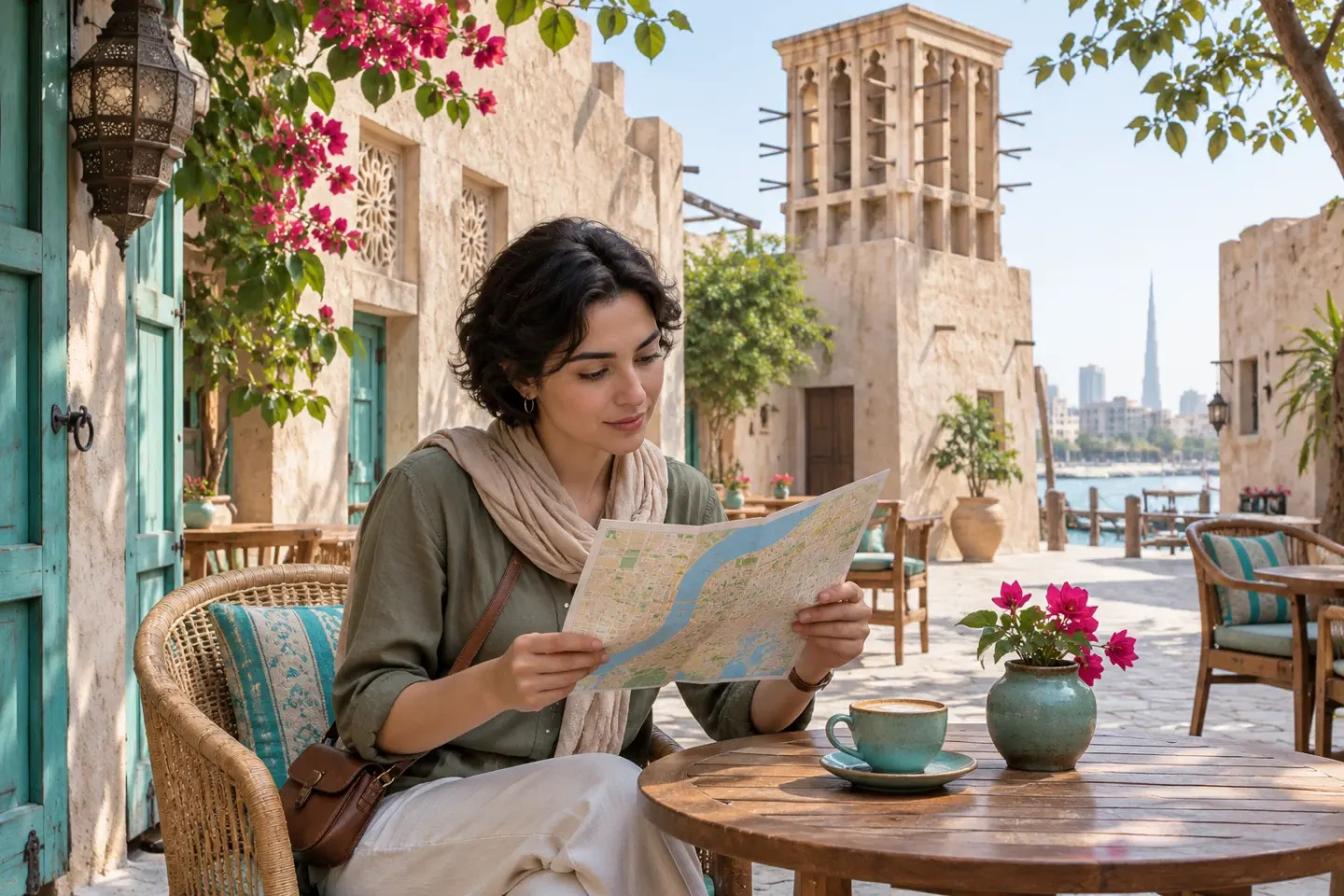
A small theme can make a solo walk more engaging. You might notice wind-tower shapes, door details, boats or the contrast between older buildings and newer waterfront areas. This turns the walk into your own experience instead of a sequence of photographs taken because they appeared on a list.
Choose a few pictures you want, then put the phone away for part of the visit. If you would like more historical explanation, consider a suitable guided experience and confirm what guiding is included. Do not assume a transport service provides the same depth as a dedicated walking tour.
Plan the crossing only if it fits
If you want to use a water crossing, check the actual route, boarding place, service and payment arrangements with the operator. A general mention of an abra is not enough to identify your boat or destination. Keep the return journey in mind as well.
Do not book another fixed activity immediately after the shortest possible crossing estimate. Boarding, waiting and the walk to your next point need time. You can also choose to stay on one side and enjoy a shorter visit if that feels more comfortable.
Make lunch part of the route
Choose a meal break that fits the area you are already exploring. A café visit can give you time to sit, review the next step and enjoy the surroundings. You do not need a distant restaurant reservation simply because it is popular online.
Check the menu and price before ordering, especially if you are keeping to a budget. If you have a specific food requirement, confirm it with the venue. A dish name or attractive photograph does not tell you every ingredient or preparation detail.
Day two: choose a modern-city anchor
Pick one main paid visit
If a skyline view or another attraction matters to you, make it the anchor of the day. Confirm the exact product, date and any time slot. A landmark name can refer to an exterior view, a general admission product or a more specific experience.
Then plan the surrounding day in the same area where practical. The Downtown Dubai guide can help organise that conversation. Avoid collecting several separate paid bookings simply because the booking pages make each one look close to the others.
Leave time around entry
Driving to a district is different from reaching an attraction entrance. There may be a walk, checks or a queue before the visit begins. Read the current instructions and allow time for those steps rather than treating a map estimate as the whole journey.
If your ticket has a fixed slot, put the flexible activities around it. A meal, browsing time or an exterior photo stop can often be easier to adjust than a prepaid entry. Keep one optional item you can drop without feeling that the day has failed.
Keep some time unbooked
Solo travel gives you permission to follow an interest that appears during the day. You may want to spend longer looking at architecture, browse a shop or sit with a drink. Leave a little room for that instead of making every hour depend on the next reservation.
If you decide to add a paid activity, check current availability and the full cost first. Do not assume an enquiry or a saved booking request means a place is reserved. Read the supplier's confirmation and terms before treating it as part of the day.
Day three: choose water or desert, not everything at once
Use the waterfront for an easier-paced day
Dubai Marina offers a modern waterfront setting with places to walk and eat. You do not need to cover the whole promenade to enjoy it. Choose a start, a comfortable turning point and a finish that connects sensibly to your transport.
Use the Marina evening guide to consider the area. If you add a cruise, confirm the actual boarding point rather than relying on the broad district name. A departure from one marina or harbour should not be assumed to use another operator's meeting place.
Keep a beach visit simple
If the coast is your priority, choose a public area and check current access, facilities and local instructions. A beach name can cover a broad stretch, and the specific access point affects your walk and journey home. Plan for the conditions on the day.
The Dubai beaches guide helps you think about comfort and practical arrangements. You can enjoy a coastal walk or seated view without turning it into a full beach day. Choose the version that fits your interests and available time.
Choose a desert experience deliberately
If you prefer an organised desert outing, ask whether a place for one guest is available on your date. Confirm pickup, the actual activities, dinner arrangements where relevant and the return plan. Different safari products can offer very different days.
Treat it as the main event rather than adding it after a crowded morning and before another late booking. Tell the team about requirements that affect participation and ask them to assess the selected option. Do not assume every activity is suitable for every guest or included in every package.
Plan transport before you are tired
Save the first and last journey
Before leaving the hotel, know how you will reach the day's main area and how you expect to return. You can make changes later, but a basic plan reduces decisions when you are tired or your phone battery is low. Save the accommodation name and location offline.
Our public-transport guide explains the broad choices. Check current routes, operating information and fares with the transport provider. Do not rely on an old screenshot when a service detail is important to your return journey.
Count the walk as part of the journey
A station or vehicle drop-off can still leave a walk to the place you want. Look at the whole connection, especially if you carry a bag or prefer less walking. Ask a tour provider for exact meeting points rather than accepting only the name of a large district.
Choose an easier alternative when it fits your budget and comfort. A short taxi connection can sometimes be more useful to you than a complicated route chosen only to save a small amount. Make the decision from your actual priorities rather than from a rule that one transport style is always best.
Keep a simple backup
Carry a charged phone and a small power bank if useful. Save the booking reference and a contact route for any organised experience. If plans change, use the supplier's stated process and ask for confirmation instead of assuming a message automatically changes the reservation.
If a journey looks unclear, pause somewhere appropriate and check the details. Rushing toward an uncertain meeting point usually creates more pressure. A few minutes spent clarifying the location can be more useful than walking quickly in the wrong direction.
Enjoy company without making it the whole goal
A shared experience can be a pleasant way to meet people, but it should still match your interests. Choose a tour, workshop or outing because the activity appeals to you. You can introduce yourself politely and see how conversation develops without expecting instant friendship.
It is also fine to spend quiet time alone. A meal, a walk or a view does not become less worthwhile because nobody else shares it with you. Plan a balance between organised structure and personal time that feels comfortable rather than copying a highly social travel story.
Keep personal details within the level you want to share. You can be friendly without discussing your room number, full itinerary or private information with someone you just met. Use confirmed booking channels for the details a supplier actually needs.
Take photographs you will enjoy later
Choose a few meaningful scenes
Think about the story of your trip: a heritage detail, a skyline view and a quiet moment by the water may be enough. You do not need to recreate every image from a travel account. Give yourself time to experience the place as well as record it.
If someone offers to take a photograph, decide what feels comfortable. Keep your belongings secure and avoid leaving a bag unattended while posing. A guide or fellow guest may help when practical, but personal photography is not automatically an included service.
Respect other people and venue instructions
Ask permission before making another person the main subject of a photograph. Follow signs and staff instructions in venues. A good view is not a reason to enter an access area or stand somewhere unsafe for the camera.
Keep equipment manageable for the route. A phone or small camera may be easier to use on a group timetable than a large setup. If photography is your main purpose, ask for an experience designed around that interest rather than expecting every shared stop to become a long shoot.
Use a clear request when booking alone
Tell the supplier your date, one-guest booking, pickup area and the experience you want. Ask for the final total, inclusions, operating style and change terms. Confirm whether any minimum operating number affects the departure and when you will know the booking is definite.
This website's planning tools help organise requests; they do not by themselves confirm supplier availability or collect payment. Keep the difference between a saved plan, an enquiry and a confirmed reservation clear. Wait for the supplier's written answer before treating an activity as secured.
If a quote is per vehicle, calculate the cost you will actually pay. If it is per person, check whether any supplement or mandatory extra applies. Ask the question directly rather than assuming solo travel must always cost more or that a supplement never exists.
Keep the three-day plan flexible
Before each day, choose one main goal and one optional addition. If the main visit takes longer or you find a place you enjoy, drop the optional item without guilt. A route is a tool for enjoying the city, not a checklist that judges your holiday.
If weather, access or a supplier changes the plan, decide what matters most and move the flexible pieces. Check the terms of any paid booking before making another purchase. Avoid adding a distant replacement simply to fill an empty space in the schedule.
At the end of the trip, you may remember a calm café stop or an interesting conversation more clearly than an extra attraction. Leave room for those ordinary moments. Travelling alone can make them easier to notice when the route gives you time to look around.
Make a small personal record of the trip
A solo holiday gives you room to notice what you enjoy without following somebody else's taste. Keep a short note each evening. Write down one place you liked, one journey that took longer than expected, and one thing you would change tomorrow. Three lines are enough. You are making the next day easier, not writing a travel book before bedtime.
For example, you may discover that an early heritage walk feels better than a late shopping trip. Keep the walk and move shopping to a short indoor break. Or you may find that a shared activity gives you enough conversation for the whole day. Leave the evening free for a quiet meal. There is no single correct balance between company and time alone.
Save useful receipts and booking messages in one folder. Add a clear name to each saved map so you can tell the hotel entrance from the attraction entrance. A map full of unnamed pins can become confusing when you are standing outside in the heat. Remove ideas you no longer want to visit so they do not compete with tomorrow's actual plan.
Before leaving Dubai, check that your final morning includes packing, the hotel checkout, the airport journey and the reporting time required by your airline. A last breakfast near your hotel may be more enjoyable than a rushed trip across town. The final memory of a solo holiday can be a calm one. You do not need another ticket to prove you made good use of the day.
Ten FAQs about solo travel in Dubai
1. What are good things to do in Dubai for a solo traveller?
Choose from heritage walks, a modern-city attraction, waterfront time and an organised outing that interests you. Start with one area and one main activity each day. The best combination depends on your budget, preferred pace and how much independent planning you enjoy.
2. Do I need to join tours for the whole trip?
No. You can combine a guided introduction with independent time. A shared experience can provide structure and possible company, while a simple walk or meal gives you your own pace. Choose activities you would enjoy even if the other guests are quiet.
3. Can I book a shared experience for one person?
Ask the supplier to confirm one place on your date and any minimum operating numbers. Check pickup, the final total and when the booking becomes definite. A saved request or initial enquiry does not by itself establish that a departure is confirmed.
4. Is a private tour worth considering alone?
It may suit someone who values a quieter vehicle, a particular start or a focused route. Ask for the actual total you would pay and the booked hours. Do not divide a private vehicle quote by its maximum capacity when working out your own cost.
5. Can I explore Old Dubai on my own?
You can plan an independent visit around the areas you want to see, checking current access and transport first. A guided option may suit you if you want more explanation or structure. Keep the walk manageable and confirm details for any paid venue or water crossing.
6. How many attractions should I book in one day?
Start with one main paid visit and leave room around entry, meals and transport. Add another only when the connection is realistic and you want the experience. A long list of reservations can reduce the freedom that makes solo travel enjoyable.
7. How do I avoid overspending when alone?
Set a daily total covering transport, food, entry and a small margin. Separate free-to-explore areas from paid services. Confirm whether quotes are per person or per vehicle, and decide on optional extras before the moment you are offered them.
8. What should I keep on my phone?
Save your accommodation location, booking references, supplier contacts and the main return journey. Keep important details available offline and charge the phone before leaving. A small power bank can be useful. Avoid relying on one long chat to find every essential detail.
9. Can I enjoy Dubai without booking every hour?
Yes. A clear main plan with free time can be a comfortable way to explore. Choose a district, a meal break and one priority, then keep an optional addition. You can spend longer somewhere you enjoy without feeling you have failed the itinerary.
10. What is a sensible three-day solo-trip structure?
One possible framework is a focused heritage day, a modern-city day and a waterfront or desert day. It is an example rather than a fixed itinerary. Adapt it to your interests, current availability, accommodation and transport, and confirm paid experiences separately.